

When Crisis Arrived Without Warning
My Eyewitness Account of the Shooting on 17th & I Streets

I heard the gunshots.
This afternoon, I was just down the street, sitting in the waiting area of an eyeglass frame store. I was the only person out front. The store owner was in the back repairing my glasses. I had already been helped, and I was looking down at my phone when the first shot rang out.
Then the second.
Then four more.
Six shots total.
Loud. Sharp. Close.
For a moment, it was just me in that quiet waiting area, the store owner in the back, and the echo of gunfire folding itself into the room.
Instinct took over.
I immediately stood off to the side and ducked low, pressing my phone to the window to record what I could. I’m practically blind without my glasses— just earlier in the day, someone had to help me find an item in the grocery store— so I knew I wasn’t going anywhere.
I was taught that in a crisis you have two choices: help alleviate the problem, or get out of the way.
So I stayed out of the way.
And I documented.
And I took notes.
Outside, the shift was immediate.
Pedestrians started running in both directions— some toward the sound, trying to understand; others away from it, trying to get to safety.
Then the police began to arrive.
First DC Metro PD.
Then the Secret Service.
Then the U.S. Park Police.
Officers moved down the street with longarms drawn. Sirens overlapped. Radios crackled. Commands echoed across the block. Within minutes, the street transformed from calm to controlled chaos.
Inside, I waited.
Almost two hours in that waiting room.
Twice I tried to step outside just to orient myself, and twice I was told by an officer to get back inside. So I stayed behind the glass— observing, listening, gathering what I could.
I messaged my friends to let them know what was happening. They told me to stay safe. One sent me a link to the local news so I could follow along as I watched everything unfold in real time.
At that point, I didn’t know who had been shot— only that someone, or multiple someones, had been hurt.
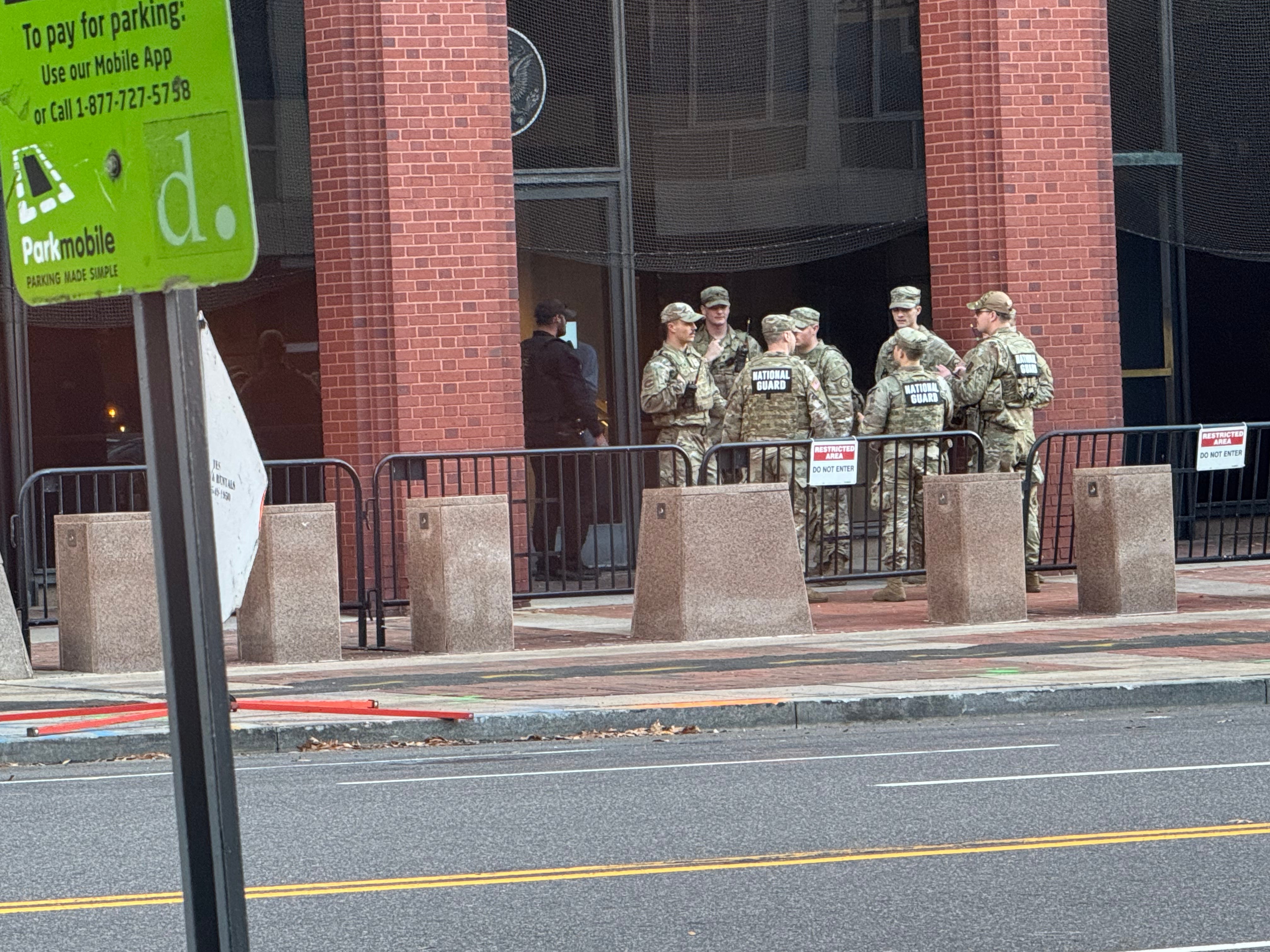
It wasn’t until later, walking home and listening to the news, that I learned it was members of the National Guard.
And that realization hit hard.
Proximity to violence is different when you hear it.
When the shockwaves hit your chest.
When the everyday— waiting on eyeglass repairs— becomes something unforgettable.
When you’re told to stay inside because the danger is still unfolding.
Tonight, I’m home. Safe.
But my body is still catching up.
This isn’t my full piece— just me speaking from where I am right now.
I am praying for these Guardspeople.
I am grieving with my fellow DC residents.
But I am also remaining wary of the responses.
I’ve said it before:
a person’s character is revealed in times of crisis and discomfort.
Pay attention to how people respond in moments of crisis.
Many hold authority.
But who are the leaders?
In the coming days, as more information becomes available and as the city responds, I’ll be offering a deeper systems-level analysis of what happened— the structures, the patterns, the context that shape moments like this.
For now, I’m naming the truth of today:
I heard six shots.
I waited for two hours.
I was praying for the ones who were shot— not knowing who or what they were and not wanting this to happen to anyone.
I made it home.
And I’m holding everyone impacted in my thoughts tonight.
No person— and no city — should have to normalize this.