

I am often profoundly moved by the experiences that shape someone. A lot can happen in a lifetime. We experience it through a worldview that was first shaped for us and then either broken or reinforced.
We have to keep our wits about us to be sure. At the same time— appearances are not always what they seem. The largest hound can hold a gentle spirit, a ferocious man can be kind, a sweet man’s smile can hide an awful disposition.
What I admire about Allen is what he endured and how he moved on from it. I appreciate how he found refuge in what brings him joy. A reminder for all of us that it is essential to resistance.
Without further ado… I welcome you to check out Allen Sonn’s story.
Content Warning: This article does mention domestic violence and suicide. If you or someone you love is contemplating death by suicide please seek out professional support. If you are in an emergency, please contact your local emergency responders.
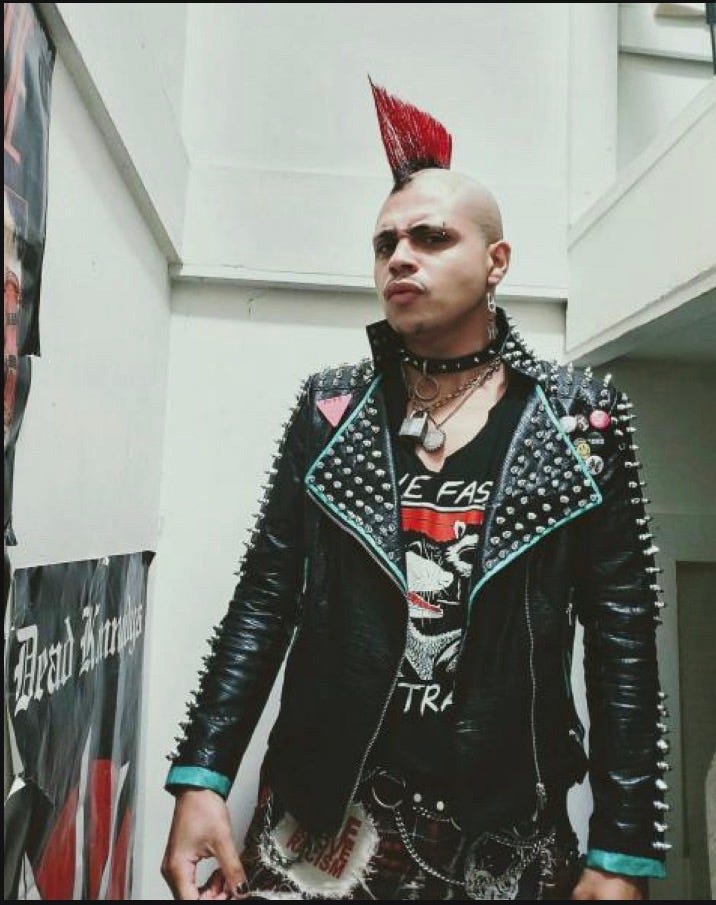
Imagine that you are dealt with some of the wildest cards that life can ever throw at you. You are growing up in a smaller, lesser-known city in the United States. You have ADHD and borderline personality disorder. You are growing up as a gay kid with family members who are not supportive. Your grandmother does the best she can but she also has her limits.
This was the life of Allen Sonn. In a recent interview the social artist shared his experience growing up in Rock Hill, New York. His tale is one of feeling isolated and misunderstood. It is the journey of a man who found solace in a creative movement and artistic expression. It is also one about embracing himself and fostering his own sense of connection to the divine.
Born in Brooklyn, Allen’s family moved to Rock Hill when he was in elementary school. “I was moved to a smaller community. People were not as accepting. A lot of them were close-minded.”
In Rock Hill, Allen found himself often feeling alone and misunderstood. “From a young age I always knew I was different. I was often the only person like me in my classes. I was often the only Black kid.
“I am Mixed but I use the two terms interchangeably… My father’s side was from Jamaica and my mother’s side were conservative Ashkenazi Jews from Germany. They came to the US after the Holocaust.”
Already experiencing life as a social outcast, Allen also began to realize he felt internally alone too. “I struggled a lot with ADHD and borderline personality disorder. I couldn’t sit still in my classes and my attention was easily pulled elsewhere. My teachers weren’t very understanding.”
“They thought that I was just a weird kid and a troublemaker.”
Allen was drawn to art from an early age. “I grew up loving Tim Burton before he was considered problematic. I was interested in horror. I remember identifying a lot with Frankenstein and the way he was misunderstood. Everyone thought he was the monster but he was just trying to be.”
The artist today considers himself a member of the goth and punk movements. “When I was kid I wanted to run away from it all. Both of my parents had their issues and they struggled. I was attracted to goth and punk because beyond the appearance there was a political message. Many of us were othered from an early age because of the fact that we were poor or because our sexuality was different.
“We were disenfranchised by the system and we knew it. Dressing up in Black, dying our hair, and getting piercings was a political statement.”
For Allen, the goth and punk scenes opened the door to expressing himself in ways that were closed to him elsewhere. “I was especially drawn to the Afropunk scene. I was a fan of artists such as Screaming J Hawkins.
Black goths aren’t truly understood by many in our community. I saw a lot of myself in them. In many ways…the scene saved me.”
Despite the grievances he had with his parents, Allen found it in himself to have compassion for his mother. He said, “I came to recognize that the 90’s were not the best decade for women. I made peace with my Mom even though that was difficult.”
“My father left me when I was young. Despite my Mother’s failings I am grateful because she– and especially my grandmother– stood by me.”
He added, “When the kids used to bully and harass me at school…I felt like I had no sense of calm. It was as if I was always in a tornado. I had to work through a lot of the trauma I sustained. That followed me into adulthood.”
There were also other elements of his identity that furthered the friction between him and his family. “At a young age I started to realize I was gay. My family didn’t take it lightly. They were raised with Eurocentric values and it was difficult for them to adjust.”
Home life wasn’t easy for Allen and neither was school. As a kid, he often found himself the target of intense bullying. “Kids always used to tease and belittle me. They would say slurs behind my back. I would get into trouble because kids would start fights and I would protect myself.”
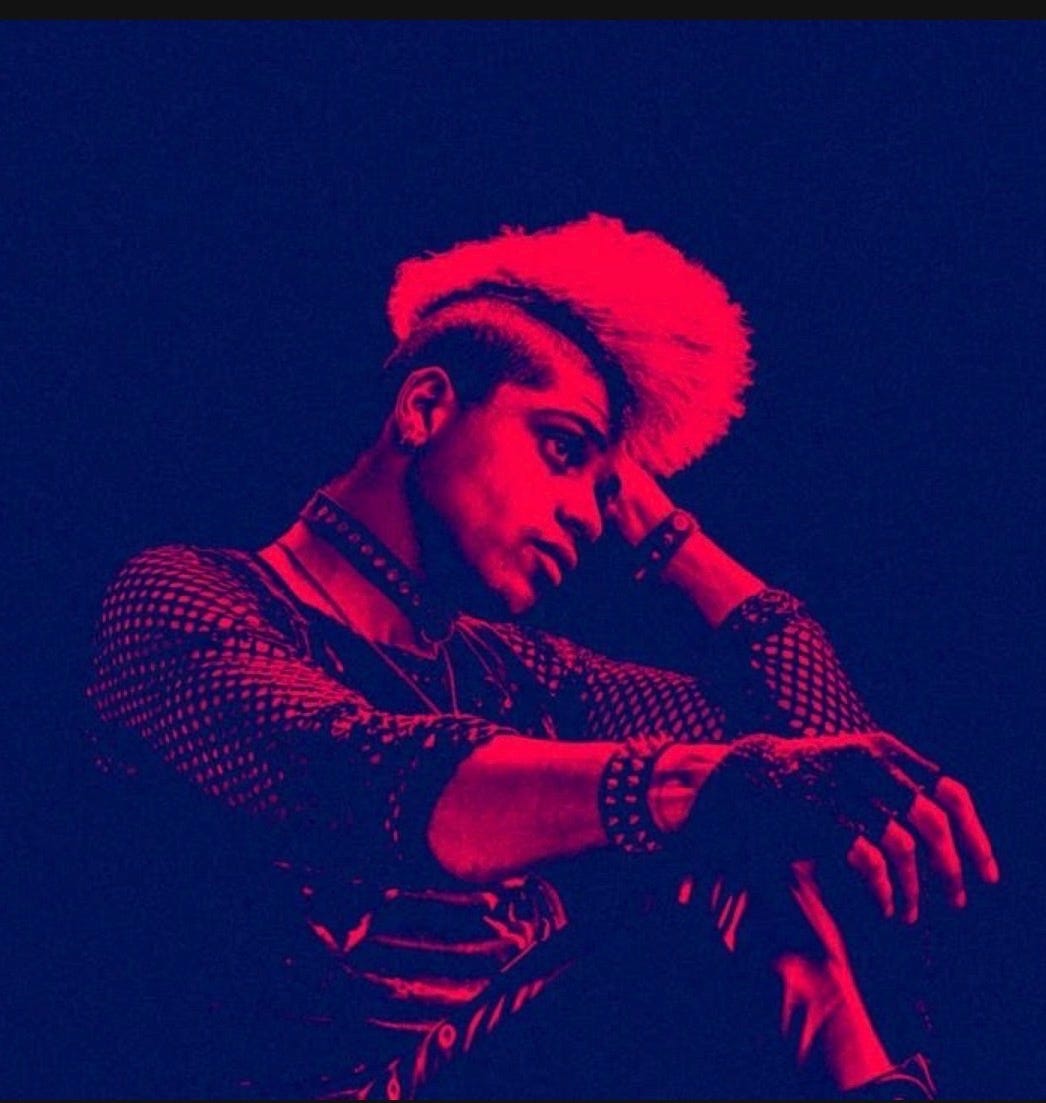
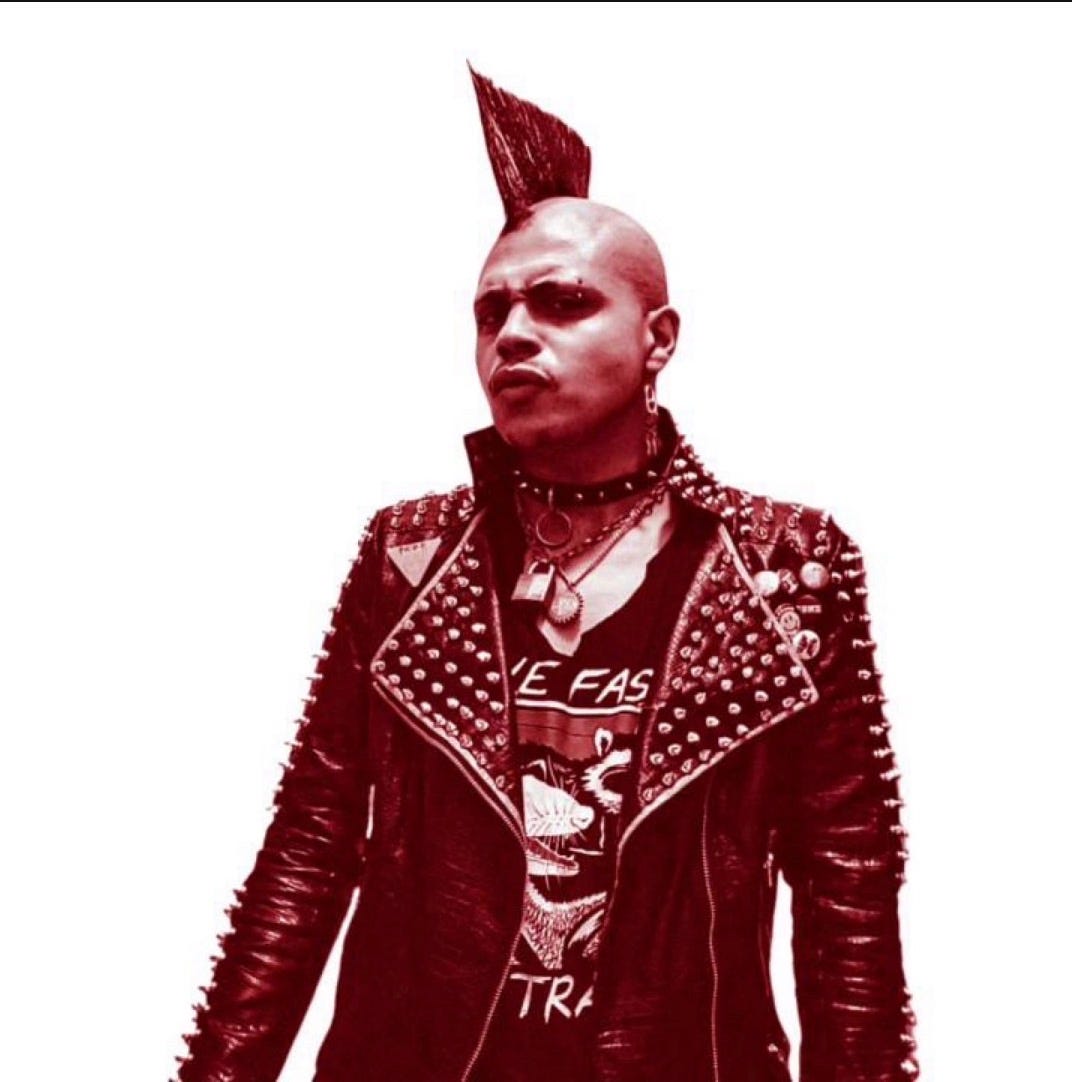
He also said, “I would often be the only one who ever looked like me. People would gawk at me because of my clothes and my piercings. I like to wear my hair in a mohawk. I’ve also been the victim of hate crime more times than I can count.”
On top of being a social outcast, Allen also struggled with his mental health. “I suffered from ADHD and borderline personality disorder. It always felt like I had a war inside my head.”
To help him cope with these issues, Allen turned to different ways of escape. “I would abuse prescription drugs and I would drink and smoke…a lot. I sustained damage to my organs from all of the drinking. I am not particularly proud of that. Years later I would get a therapist and that helped me work through a lot of the turmoil I felt.”
However, it wasn’t just drugs that Allen turned to for solace and comfort. He also found himself being drawn to traditions that were different from the form of Judaism and Christianity he was being brought up with. “I was raised Jewish by my Grandmother but my family is diverse in their religious beliefs. Me personally…I was drawn to Pagan traditions.”
Paganism is a broad term that refers to religious traditions that have more than one god. They are oftentimes more centered around nature and the belief in spirits. From a young age, Allen was fascinated by these traditions regardless of where they originated from in the world.
“I was attracted to the pagan traditions on either side of my family. I was intrigued by Norse Paganism and Kabbalah because of my Mom’s side.
“From my Dad’s side I was drawn to Black African traditions…I really took a lot of inspiration from Vodou and Haitian Voodoo. There’s a lot of stigma around these traditions because of Christian narratives that predominate the mainstream. However, I found that they are no more or less problematic than many monotheistic traditions. “
Time and again, it would be his belief in these traditions that would save him.
Allen’s life took several twists and turns after he grew up and started fending for himself. He said, “I struggled a lot with suicide attempts. At the time it felt as though it was too much for me to handle. My friends did what they could to support me.
“I also found solace in these traditions too.”
Allen also experienced a string of abusive relationships and periods of homelessness. “I was deeply in love with this one man but we were both economically struggling. It got to a point where he and I would fight over everything.”
Though that relationship came to an end, he still found himself in yet another abusive relationship.
“I was in an abusive relationship that almost destroyed me completely. I was deeply enamored with this man even though he would verbally abuse me. When he physically assaulted me I was crying and begging him to stop. I developed a distrust of men afterwards that I am still overcoming.”
One of his partners who abused him left Allen so badly injured that he had to call emergency responders. “I was dating a White man at the time. After he abused me, I called for help because he hurt me so terribly. I was the one who was injured and I had defended myself against his attacks, but he still sobbed to the police that he was the one who was in trouble.
“When the police arrived, they arrested me instead.”
The artist’s experience with the police and how they handled the situation is one of the many reasons why Allen is an active social artist to this day. “I was the one who was injured and the victim of assault. I did what I could to defend myself from my ex but it was nothing compared to what he had done to me. Yet I was the one arrested.
“I know from personal experience that police are far from perfect.”
The encounters left a tremendous toll on Allen and his mental health. “I was struggling terribly for a long time. I had to do a lot of unpacking and I got professional help to assist me with it. I would also pray every night to my gods. From my experiences I found myself being drawn to some of the more feminine deities.”
Allen elaborated, “I am especially drawn to Freya, Lilith, and Kali. Their stories of overcoming obstacles that these powerful men tried to impose on them gave me a sense of strength. If they could do it then I could too.”
When asked about what else he thinks the traditions offer, Allen said, “I appreciate the fact that many pagan traditions are not judgmental. There is nothing wrong necessarily with you believing in a different god than me. Pagans typically see that our deities are one and the same. More often they have a lot more in common in fact!
“I also appreciate that pagan traditions have a serious understanding of commitment and relationships. You are what you put out and what you give. It’s important not only to hold connection with those who are here at the moment but you have to honor your origins. It’s also about your connection to the earth.”
Allen’s eyes brightened as he spoke about his understanding of paganism. “I love how in paganism there is a sense of freedom. You can be whoever you are as long as you are not hurting anybody. You have to do good, and it’s not just about faith. At the end of the day, paganism reminds me that I have to live with myself.”
Along with his faith in his traditions, Allen also turned to art as a means of expressing himself. “I have always been an artist even as a child. My art teachers were always encouraging of my work. I even won a couple of trophies.”
When asked about what his art explores, Allen admitted that they were topics related to homoeroticism. “I am looking to show the world that we are normal too. My work is a reflection on the desires between gay men. I tend to use a psychedelic focus…looking for new ways to look within and without.”
Allen sees art as the thing that saved him through his challenges. “If it wasn’t for art I probably wouldn’t be here. It is the way I choose to express myself. If I am not able to create, I notice a change in my mood and behavior.”
Through the challenges that Allen endured he came out a better person. He now advocates for greater inclusion efforts in his local community. “When I was struggling, my friends and community stepped forward. I now want to be that sense of community for others too.”
When asked about what advice he would give to a younger Allen he responded, “Find your tribe. Don’t ever give up hope. Know that there will be people out there who understand you. They will be there to help uplift you and get through it.”
Allen Sonn continues to make art and to be an activist. His art is both a reflection and a statement. He currently resides in Binghamton, New York.
You can learn more about Allen’s work via his Facebook page: https://www.facebook.com/allenthefoxsonn. You can also follow him on Instagram @arsenic_obesssion.