

Bias In The Machine
What AI Can't See

🧰 Owning The Tools We Use
Last week, I shared what it means to truly own our stories.
This week, my mind’s been on something just as important:
How we show up in relationship to the tools we use to tell those stories.
We’re in a moment where tech is changing everything—how we create, connect, and move through the world.
AI is doing a lot.
It’s unlocking things that once felt out of reach.
It’s making space for new voices, new ideas, new possibilities.
But let’s be real— that’s not the whole picture.
It’s also shaking up the economy.
Disrupting the creative ecosystem.
Straining the planet.
And making it harder for many artists to get the credit— and compensation— they deserve.
I’m not anti-AI. I use it.
It helps me organize my thoughts, sharpen my language, and get clear.
But the voice? The vision? That’s still mine.
Unless I say otherwise, everything you read here comes from me.
Owning our tools is just as radical as owning our stories.
If we don’t stay clear on that, it gets real easy to hide behind the tech instead of standing in our truth.
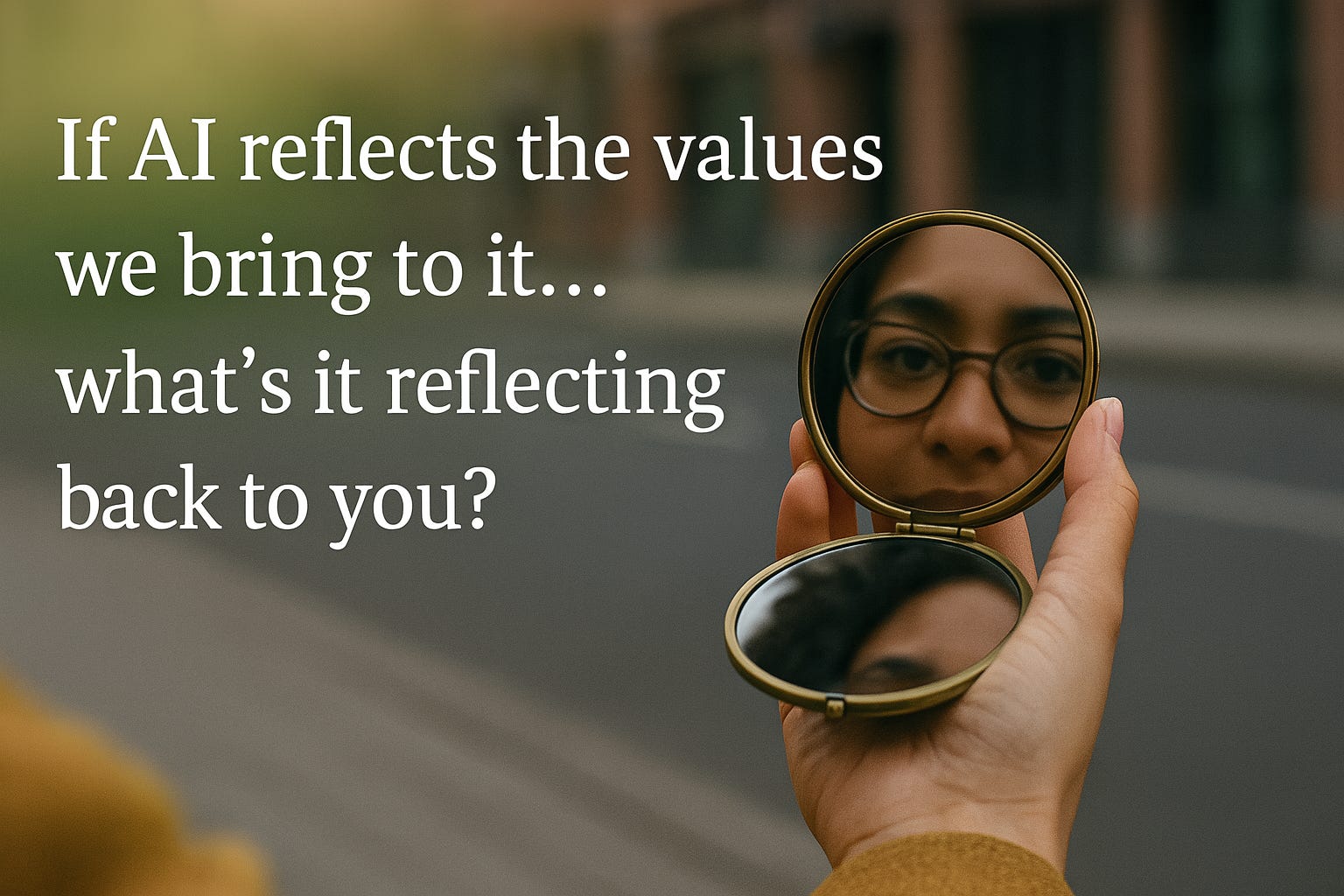
If AI reflects the values we bring to it… what’s it reflecting back to you?
💌 Subscribe if you’re into reflections on tech, leadership, legacy, and the real work behind the work.
And if something in here stirred something in you— pass it on.
✨ Partner Spotlight:
Rooted in culture. Powered by community.
This month, I want to shine a light on a brand that’s doing something special in the DMV— and beyond.
ChamCham isn’t just a drink. It’s a bridge.
Infused with Caribbean and West African flavors, ChamCham brings together taste, tradition, and storytelling in every bottle. But what I love most about them isn’t just the product— it’s the purpose behind it.
We partnered not just because we vibe on aesthetics (though trust me, their branding is on point)— but because we share a commitment to joy, community, and reclaiming narrative.
In a world that moves fast, ChamCham reminds us to savor.
To honor our roots.
To uplift flavor and future.
If you’re looking for something that tastes good and stands for something?
Start with ChamCham.

🌟 Community Spotlight
This month, I’m honoring Dr. Ashley Jones, an artist, thinker, and cultural worker whose creative brilliance challenges the status quo and nourishes the soul.
Dr. Jones doesn’t just create art—she creates frameworks for remembering. Her work pulls from history, intimacy, and deep research, reminding us that storytelling isn’t just a tool—it’s a responsibility.
In a world where tech is racing ahead, Ashley’s practice slows us down in the best way.
She reminds us that beauty can be a site of resistance.
That art is not a luxury.
That truth, when held with care, can become something transformative.
I’m grateful to witness her work and to celebrate it here.
Follow her journey here→.
🧠 Innovation Corner


If we’re gonna talk about the future of tech, then we’ve got to talk about the folks who are doing the work to make sure that future is actually just.
This month, I want to spotlight Christian Ortiz and his work with Justice AI.
Christian isn’t out here chasing hype— he’s building something with roots.
Justice AI isn’t just a cool idea— it’s a framework grounded in abolition, accountability, and care.
They’re asking the hard questions most people skip past:
Who is AI really serving?
What kind of world are we building with it?
And how do we make sure that the communities most impacted by harm are the ones shaping the tools of tomorrow?
Christian reminds me that ethics in tech isn’t a checklist— it’s a commitment.
One that shows up in the code, the values, the team, the why behind it all.
Want to see what a liberatory approach to AI actually looks like?
Check out what Christian’s building.
Learn more about him in our recent Insight interview here→.
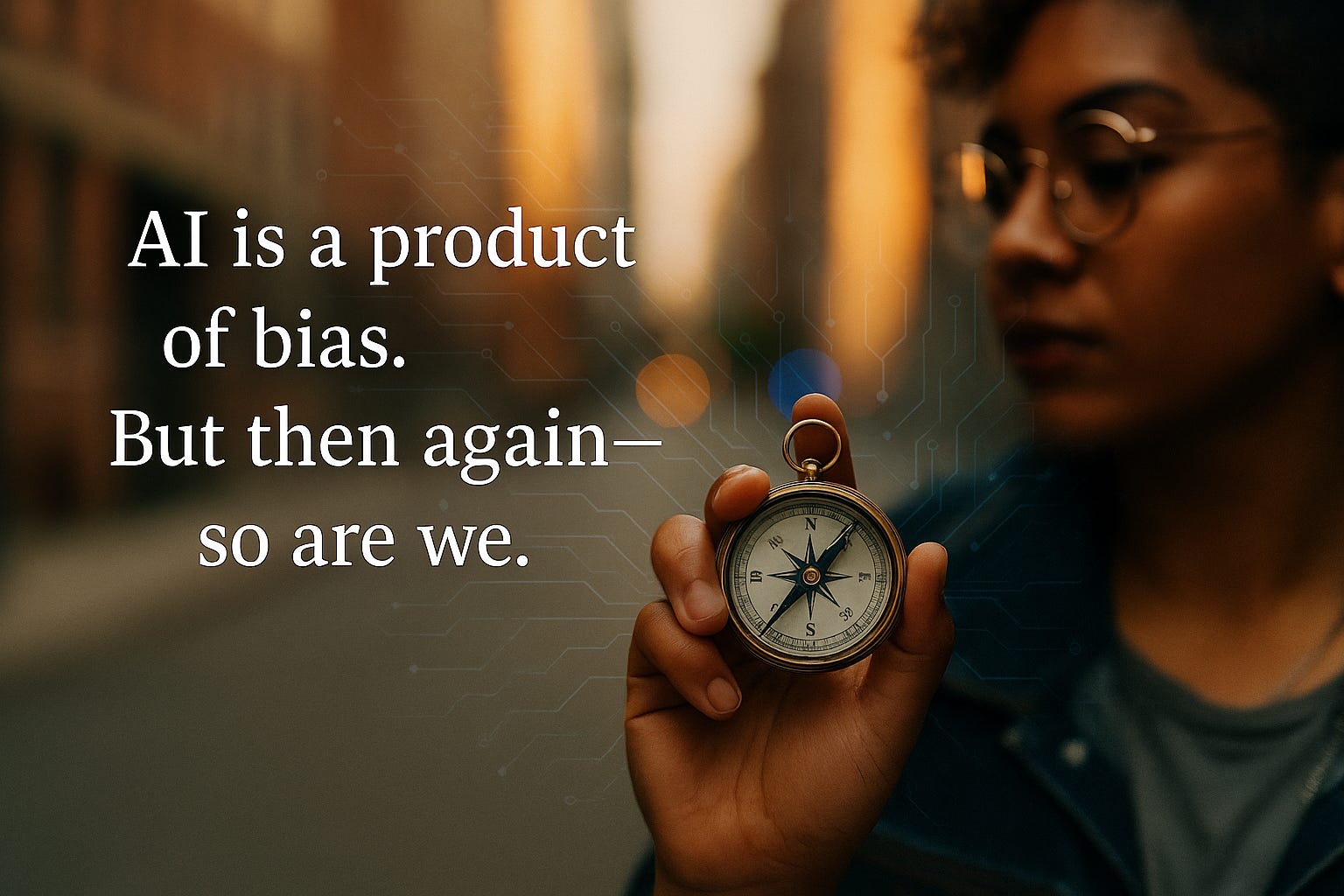
🧭 If innovators like Christian are redrawing the map… what does it mean to hold the compass for ourselves?
In this week’s featured essay, I reflect on the tools we carry— and the biases they carry with us.
Because a compass doesn’t just point north. It points to what we choose to follow.
And in this age of AI, the real direction we need… might be inward.
👇🏽 Come join me.
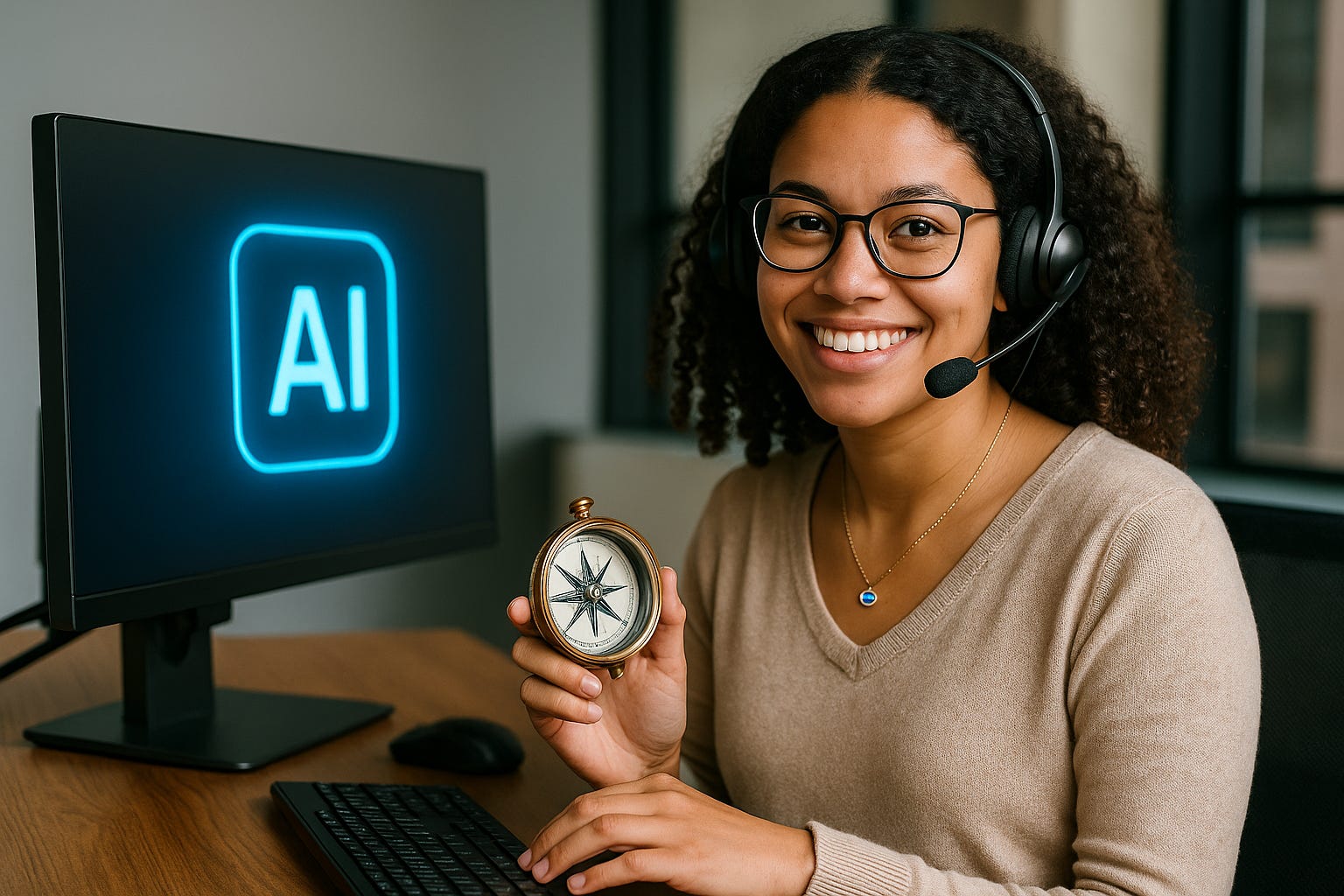
We often talk about artificial intelligence like it’s something outside of us—something to be feared, worshipped, or regulated. But AI doesn’t exist in a vacuum. It reflects what we feed it: our histories, our imaginations, and yes, our prejudices.
Much of today’s AI has been trained on datasets that replicate existing inequalities. From underrepresentation of the global majority to systems that prioritize profit over justice, AI systems can easily reproduce the same harm they claim to solve— if left unchecked.
But here’s the twist: so can we.
Humans, too, are shaped by bias— by culture, memory, trauma, and power. The danger is not that AI has bias. The danger is when we pretend we don’t.
This is where story matters.
I’m reminded of His Dark Materials, where Lyra is gifted an alethiometer— a truth-telling device that requires both intuition and humility. The answers it gives depend on the openness of the one who reads it. In many ways, AI is like that: not magic, not perfect, but a tool for discernment— if we choose to use it with discernment.
And just like Lyra, we need to be intentional readers. We need to be honest about our motivations, our blind spots, and our relationship to power.
I use AI to help shape my words and stretch my thinking. But I also take responsibility for what I publish. The tools I use are just that— tools. They don’t replace discretion. They don’t define my voice.
We live in an era where our tools are evolving faster than our ethics. But maybe, just maybe, this is our call to evolve too— not just technologically, but spiritually. Not just in code, but in conscience.
So let’s not worship the tool.
Let’s not fear it either.
Let’s learn how to wield it wisely— together.
With soul,
Justin Cobb

Voice Note from Justin Cobb
Transcript here.
Prompt ✍️
How are the tools you are using shaping your experience?
Share your response and tag me Justin Cobb.
Final Thoughts
In this week’s newsletter we navigated some profound thoughts around the ethical implications of AI.
Paid subscribers aren’t just supporting a project— you’re investing in a movement.
More stories, more truth, more impact is coming.
Let’s go!
Want to help this work grow? Share this post with someone who needs it.